Suspended Economic Reality is Drawing to an Imminent Conclusion. The True Scale of UK Unemployment is on the Cusp of Revelation.

Chancellor Rishi Sunak’s furlough programme has, by the metric of its stated purpose been an apparent success, hitherto preventing a dramatic increase in unemployment during lockdown.
A disconcertingly prodigious 8.4 million workers currently fall under The Coronavirus Job Retention Scheme; the government creating a state of economic suspended animation, in an endeavour to protect livelihoods until economic activity could broadly resume.
The scheme was envisaged as a temporary solution, (originally scheduled to end in June) providing state sponsored shelter from a global tempest, the sheer magnitude of its cost equating to a limited period of viability. Thus the announcement delineating the chronology of its termination.
The scheme is scheduled to close to new applicants on the 10th June and will incrementally provide reduced payments to employers over the Summer months, concluding entirely on 31st of October.
Employers therefore, are belatedly obliged to face the unwelcome reality of reduced staffing levels commensurate to an unfavourable economic environment, one in which commercial survival is far from assured. Consequently, a proportion of employees currently supported on furlough will find they are in actuality among the ranks of the unemployed.

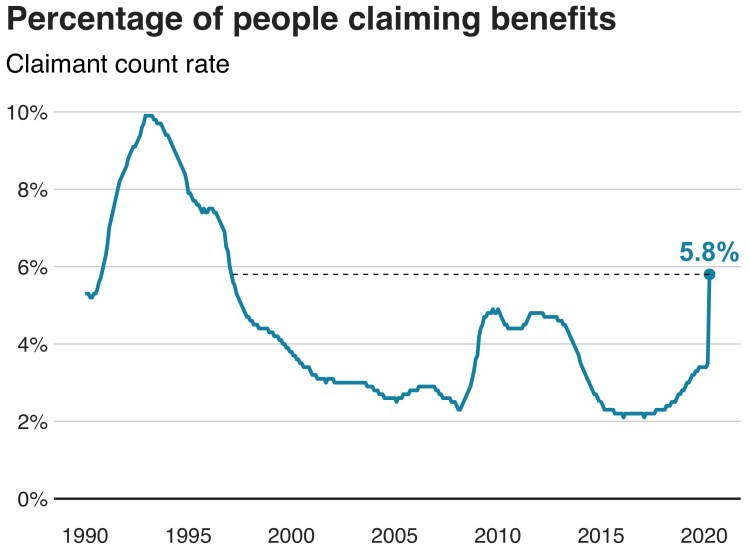
The significant rise in unemployment already recorded threatens to be a mere foretaste of the job destruction the pandemic and resultant lockdown will inflict. The precise percentage of furloughed employees destined for unemployment is as yet undefined, however, the very fact so may employers felt compelled to submit over 8 million individuals to such a scheme signifies the unprecedented levels of apprehension.
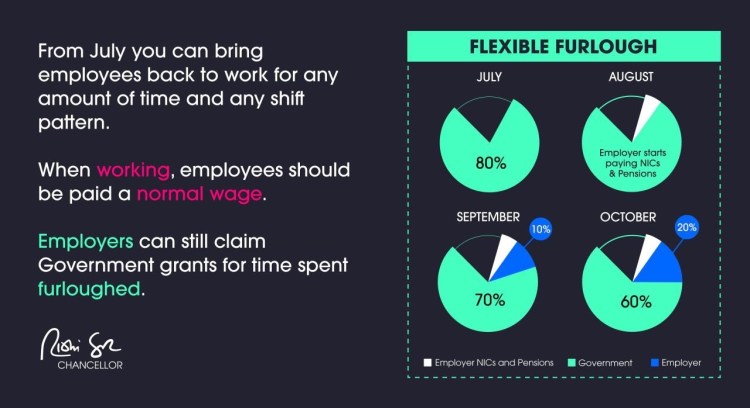
As government assistance is incrementally withdrawn, leaving employers to cover a rising percentage of salary costs, in addition to full pension and National Insurance Contributions, definitive redundancy decisions will become increasingly necessary.
Millions of firms have faced a protracted period of drastically reduced revenues and soaring unfunded debts; significant retrenchment a lamentable, logical corollary.
In the unlikely event staff retention beyond October remains as high as 80%, a minimum 1.2 million people could find themselves unexpectedly out of work and facing parlous prospects for reemployment. A grievous situation which would increase the registered number of unemployed beyond 3 million, (excluding job losses already occurring in sectors not covered by the scheme) in an economy forecast by the Bank of England to contract by an unparalleled 14% in 2020.
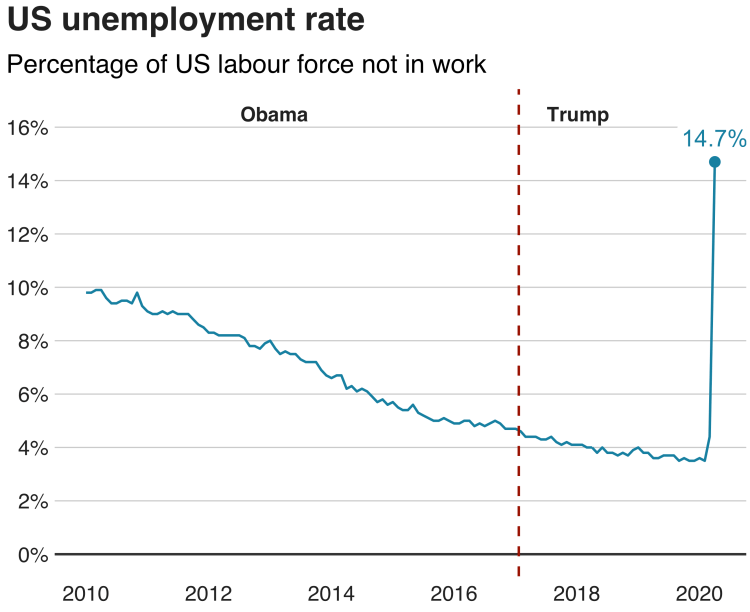
An unsettling harbinger is the unprecedented rise in US unemployment. While financial assistance on a monumental scale has been authorised by Congress, no equivalent to the Job Retention Scheme was established. As the UK facility is wound-down, the threat of similar catastrophic jobs losses looms.
Though undoubtedly principled, the Job Retention Scheme has in reality provided a fleeting delay to the inevitable. Furlough of employees provided welcome deferment to the tribulations of mass-unemployment, but it should not be mistaken for a policy panacea.
The ultimate object of the scheme was to maintain millions of jobs in a state of suspended animation until lockdown restrictions could be lifted, allowing their eventual resumption. Unfortunately, while the jobs have been theoretically protected for the duration, their economic necessity has been destroyed by deep recessionary conditions.
In essence, the Job Retention Scheme has delivered results analogous to the phoney war. Those within the scheme have been imbued with a false sense of security, believing their return to work to be assured, when in reality an indeterminate but consequential number are in effect already unemployed.
Much of the official data and concomitant expert commentary to-date has failed to reflect this unpalatable truth. In this respect, the country is in a somnambulant trance, lacking cognisance of the imminent anguish yet to be endured.

Stephen Cherry. 8th June 2020.
 BROAD SPECTRUM
One thought on “Sleepwalking into Catastrophe.”