Remember when every inch of newsprint, every television and radio report, each social media post was apparently devoted to Brexit? The epoch of calamitous prophesy. The period sardonically described by ex Bank of England Governor Sir Mervyn King as a “collective nervous breakdown”. Insightful, how a genuine crisis has driven the previously all consuming subject from the public consciousness. The Covid 19 pandemic is an authentic emergency, as opposed to a confected cataclysm, one which represents an existential threat to our health and economic condition.
Away from the national and international media gaze, trade deal negotiations between the UK and EU have continued. These parleys, like the numerous Withdrawal Agreement summits before them, are trammelled by a fundamental misalignment of opinion; a lack of political and diplomatic cognisance.
Essentially, the UK has conducted the talks from the perspective of an independent nation, one reacquainting itself with the freedoms sovereignty conveys. The EU, accustomed to acquiescence to its acquis, has found this attitude rather irksome.
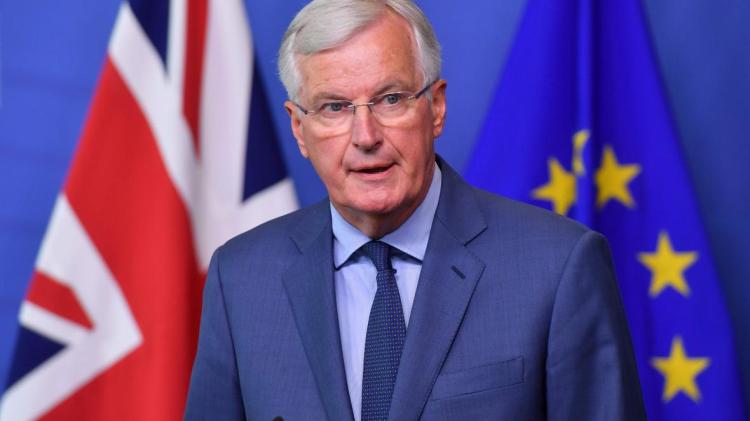
Michel Barnier, the EU’s Chief Brexit Negotiator, continues to proffer a Brussels deal unlike any free trade agreement (FTA), which demands a ‘level playing field‘ on taxation, labour rights, state aid and the environment, status quo access to UK fishing waters and acceptance of all future acquis through ‘dynamic alignment‘. A proposal which attempts to lock the UK into the EU legal structure in perpetuity, under the judicial ambit of the European Court of Justice (ECJ).
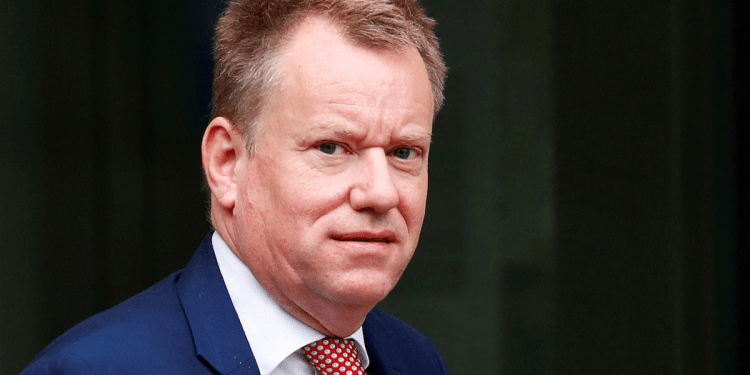
David Frost, the UK’s Senior Brexit official, has repeated the British government’s position, that these proposals are not the basis for success, saying “we very much need a change in the EU approach”. What the UK seeks is an ‘off-the-peg‘ free trade agreement along the lines of the EU deals with Canada, Korea or Japan. A ‘skinny FTA‘ with no tariffs or quotas and a separate Norway-style fishing agreement with negotiated annual catch quotas. 10 Downing Street believes such a proposal could theoretically be approved quickly, perceiving the oft repeated ‘complexity‘ objection as a smokescreen.
“It is hard to understand why the EU insists on an ideological approach which makes it more difficult to reach a mutually beneficial agreement” Mr Frost said.
For the impasse to be overcome, the EU would need to take a psychological leap in accepting the UK as separate and sovereign, which would require a damascene conversion Brussels is seemingly unable or unwilling to undergo.
There are now fewer than six weeks and one negotiating round before the the legally binding end of June deadline, by which any UK request to extend the transition period beyond year-end must be made.
‘The clock is ticking’ has assumed a profoundly different meaning in light of the Covid pandemic and its magnifying effect on the Eurozone fiscal crisis. Monsieur Barnier goaded the UK with this phrase throughout the benighted Theresa May Premiership, escalating the pressure at every deadline. Boris Johnson, atop an eighty seat (Brexit backing) majority is a very different proposition.
Ironically, Monsieur Barnier now accuses Britain of inversely deploying his tactic. This is telling, as it is now the EU which is increasingly disconcerted by British certitude.
Both Chief negotiators have publicly expressed their displeasure at the parlous state of negotiations, elevating the risk of Britain abandoning talks in June and actively pursuing a no-deal exit.
Hence the exigent exhortation for Britain to extend its transition period by the European Parliament’s centre-Right bloc, the European People’s Party (EPP), expressed as anxiety at Britain’s imminent change of circumstance. “I cannot see how the UK Government would choose to expose itself to the double whammy of the Coronavirus and exit from the EU Single Market. I can only hope that common sense and substance will prevail over ideology”. So says Christophe Hansen MEP, the group’s Brexit negotiator.
The usual section of the British political establishment is in agreement: perhaps they are gullible, or disingenuous: either way, the platitudinous mantra of transition-extension used once more to derail Brexit by means of interminable delay.
Global markets and EU member states have been uniformly labouring under the misapprehension that the European Central Bank (ECB) would purchase prodigious volumes of debt issuance on an indefinite basis, contriving a de facto fiscal union in the process (in treaty contravention, but with the connivance of the ECJ).
The recent German Constitutional Court (Verfassungsgericht) ruling, which declared the ECB’s mass bond buying programme (via Bundesbank involvement) in breach of German law, has destroyed any residual hope of eurobonds or joint debt issuance, finding quasi-fiscal transference undemocratic. Germany’s senior judges have drastically curtailed meaningful monetary bail-outs.
The EU faces a consequent conundrum. An apparently insoluble question of how to orchestrate a fiscal bail-out of its Southern European member states, hamstrung by diminished ECB interventions and a dearth of political unity. The burden is set to fall on the internal EU budget, via a ‘front loaded surtax‘ during the early years of the next Multi-Annual Financial Framework (MMF – a seven year budgetary settlement). Argument rages as to the realistic cost implications of this epic undertaking, but the majority of protagonists agree at least €1 trillion of expenditure will be required. This figure is in addition to the already bloated MMF proposal and is deemed insufficient by many independent observers.
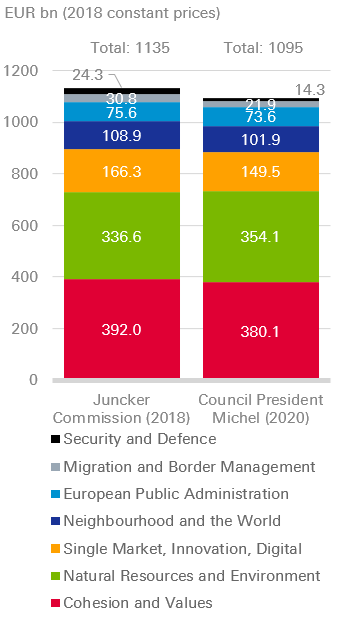
An extension to the transition period risks exposing Britain to intolerable involvement in this monumentally costly enterprise, (a one-way transfer from the British Exchequer) while devoid of veto powers and a non-beneficiary of recycled EU funding.
At this critical juncture, it is worth reacquainting ourselves with the insufferable strictures of the current extension arrangement: Britain is obliged to accept and implement any new law or regulation foisted upon it by the EU machinery, including all rulings from the European Court (ECJ), without democratic consent. It is denied even the ‘consultation‘ accorded to European Economic Area (EEA) associate states.
These are terms more appropriate to a country which has accepted unconditional surrender, rather than one which has reasserted its sovereign independence.
A Free Trade Agreement (FTA) between the UK and EU is the desirous outcome. However, this aspiration should not be secured no matter the cost and must under no circumstances entrap Britain in a perpetual and impoverishing transition extension.
Four years have passed since The United Kingdom European Union membership referendum took place, a period beset by tortuous delay, incompetence, delusion and often Machiavellian manoeuvring. To honour its own democratic result, Britain is duty bound to leave on 31st December 2020. Deal or no deal.
Stephen Cherry. 21st May 2020.
 BROAD SPECTRUM