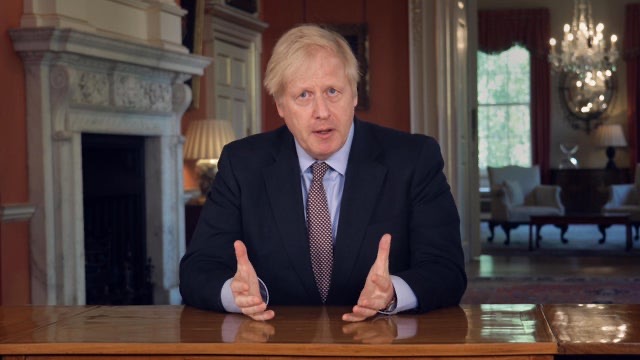
Prime minister Boris Johnson addressed the nation, revealing the much vaunted ‘roadmap out of lockdown’. The anticipation encouraged by government sources ahead of the statement had created the perfect conditions for disappointment, which was duly delivered. An expected outcome for anyone who had considered the finely balanced options open to the government.
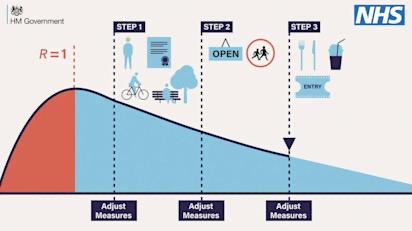
The government’s 51 page plan was duly published, and communicated by the PM to a scantily attended House of Commons. The dossier, entitled “Our plan to rebuild” setting out the three-phase strategy for gradually lifting restrictions.
The plan, Mr Johnson said is designed to “give people hope”, though this was soon followed by a caveat, the first of many, that to save lives “we must acknowledge that life will be different, at least for the foreseeable future”. In a further stark admission, he recognised a vaccine for Covid 19 may never be found, meaning the UK was in for a “long haul” fight against the virus.
Even before the heavily contingent three stage timeline had been sketched out, the opening utterances and cautious Prime ministerial countenance at the dispatch box exemplified the appalling dilemma faced by government and nation alike: to delay a meaningful easing of restrictions is to inflict yet deeper, unsustainable economic damage, to miscalculate the timing and focus of any changes is potentially lethal.
Political reality has necessitated a reinterpretation of the restrictions, but given the severe risks inherent in any decision, subtle amendments are the cautious response. The ‘new’ guidance in fact represents a shift in emphasis rather than any substantive change in policy.
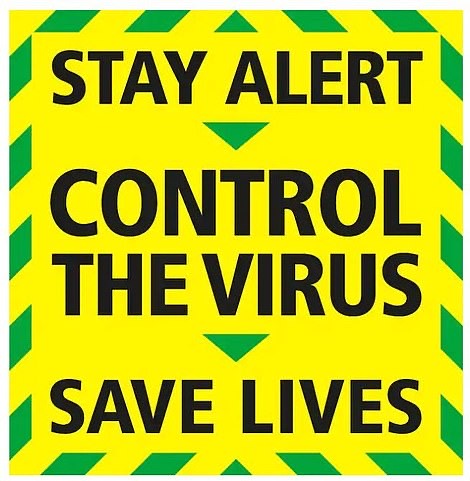
In pursuit of clarity, the government has introduced a traffic light system, via which it intends to convey the developing risk assessment and resultant policy changes. While simplistic, the system provides an elegant illustrative method of justifying action or indeed inaction in the coming weeks and months. One suspects that maximum room for manoeuvre was a prerequisite to today’s announcements.

Initial steps were envisaged as tentative, though encouraging a return to work for those unable to do so from home, apparently without detailed discussion or prearranged protocols for public transport, somewhat undermined the coherence of the message.
Restarting vast sections of the moribund economy will be a complex undertaking, one in which missteps will undoubtedly occur, but if the public are to remain compliant to government edict, scenes like those on the London Underground cannot be repeated.
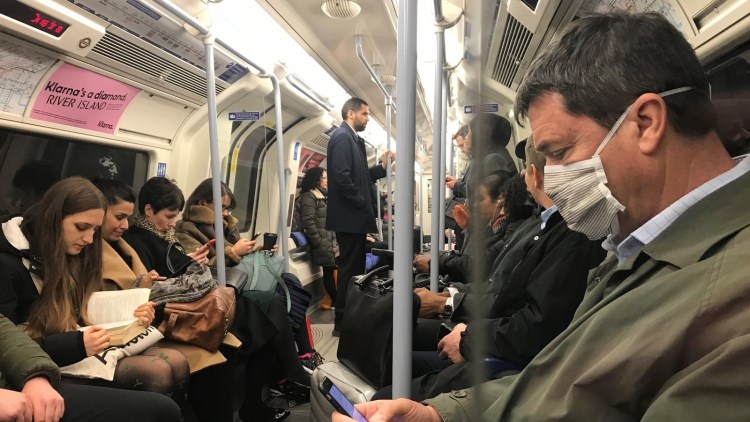
Unfavourable reactions from London Mayor Sadiq Khan and RMT union leaders were unsurprising, given the apparent lack of detailed planning and transparent, proactive negotiation. The government must take the lead in this arena if political strife and industrial action are not to exacerbate an already deleterious situation.
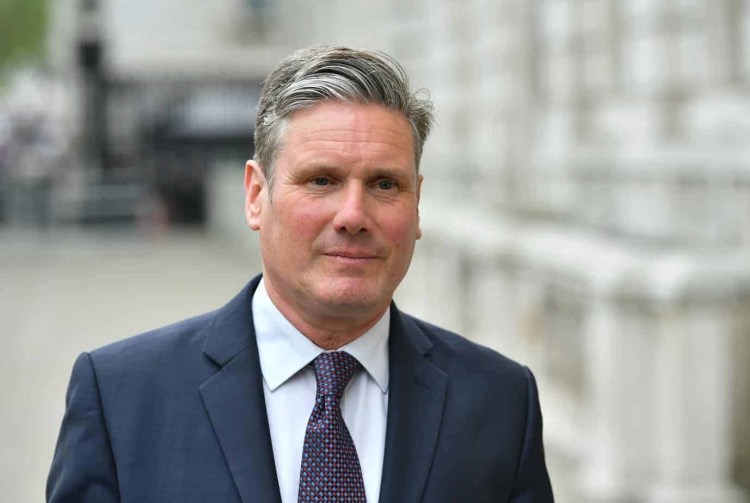
An insufficiently unified approach has left government flanks exposed, a risk made manifest by Labour leader Sir Kier Starmer’s response to the government’s proposals: “This statement raises more questions than it answers. The Prime Minister appears to be effectively telling millions of people to return to work without a clear plan for safety or clear guidance how to get there without using public transport”. Whether one deems these comments reasonable or opportunistic, they are not devoid of efficacy.
Intriguingly, as the government takes its first provisional steps to marginally redressing the economic carnage wrought by the pandemic, the Labour party, alongside the political consensus in Scotland, Wales and Northern Ireland has rejected the approach, effectively adopting a pro-lockdown stance. The brief cessation to political hostilities in Westminster appears to be at an end.
The months and possibly years ahead are paved with uncertainty, every policy judgement an act of fanumbulism, as the government faces a roll call of conflicting decisions. The phased approach toward a new kind of normality will be cautious, incremental and potentially prolonged.
During a Royal Economic Society webcast, Andy Haldane, the Bank of England Chief Economist, warned that even as the prospect of some relaxation of lockdown measures emerge, company and household spending could be curtailed for some time. “All crises” he said, “leave scars and this crisis will assuredly be no exception”.
In line with the sentiments expressed by Mr Haldane and previous comments from Bank of England Governor Andrew Bailey, UK financial markets were decidedly unsettled. The old adage ‘buy the rumour sell the fact’, was certainly apposite today, as equities boosted by the prospect of some return to economic activity, reversed early gains on concerns of a resurgent health crisis, as reports from South Korea and Germany indicate the number of new Covid cases has markedly increased amid easing of restrictions.
Politician of all parties have long referred to “difficult decisions”, a phrase often synonymous with unpopular policies. Now, decisions of life and death, judgements fundamental to our future existence are a daily reality. While some were disappointed by the paucity of changes in government diktat and others perturbed by even marginal amendment, policy moderation with maximum caution struck this observer as an enlightened start, to what will be a circuitous and protracted path toward an incomplete recovery.
Stephen Cherry. 12th May 2020.
 BROAD SPECTRUM