
The German Constitutional Court (Verfassungsgericht) ruled the European Central Bank’s mass bond buying programme is in violation of German law (grundgesetz) and in breach of EU treaties. The ruling, made in Karlsruhe, Baden-Wurtemberg states that the ECB, in purchasing over €2.2 trillion of government bonds since 2015 has “manifestly” flouted EU treaty and exceeded its legal mandate. The court’s findings express a blatant rebuke to the ECJ and their ruling in support of the ECB asset purchase programme. Declaring the ECJ ‘ultra vires’ (acting beyond legal power or authority) is a clear reassertion of German national judicial supremacy.
In a reverberant passage, the court reminded ECJ judges that member states are the “Masters of the Treaties”, not the reverse, and that if national courts were to rubber stamp decisions made by EU institutions, it would be a slippery slope and a threat to the very “principle of democracy”.
Since the founding of the European Community in 1957, despite numerous legal skirmishes, no member state ever legally asserted a European body had overreached its purview: now Germany, the engine of European GDP and powerhouse of the Eurozone has declared EU authority secondary within German borders. Not only has the highest court in the land chosen to reassert its judicial primacy, it has done so amidst an unprecedented economic crisis, which already presented an existential threat to the Euro project.

The court ruling, which casts doubt on the ECB’s ability to execute aspects of monetary policy and cruelly highlights the inherent flaws at the heart of the project, entered the public arena via widespread coverage, but relatively little fanfare, almost immediately drifting into obscurity. Bond markets appear to assume a classic EU ‘fudge’ can once more successfully circumnavigate inconvenient truths, apparently wilfully ignoring the profundity of such an unparalleled judgement.
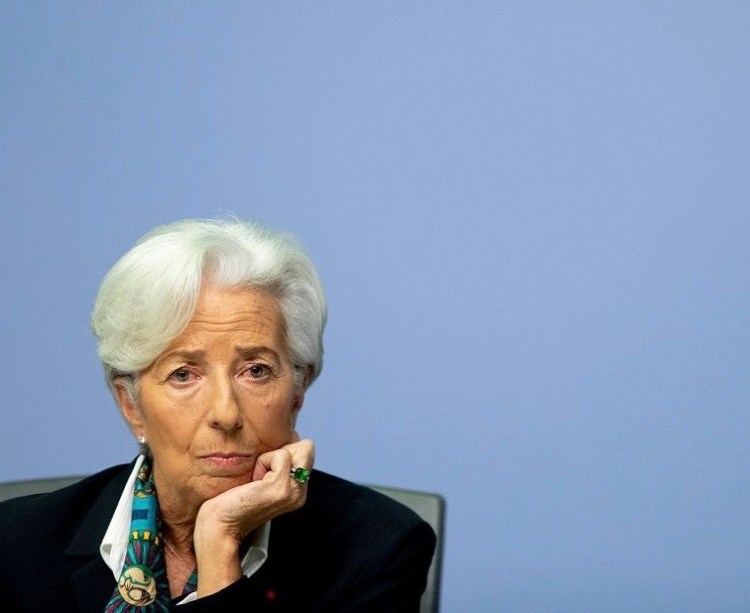
Central banks around the globe have rapidly expanded the monetary base, actively purchasing domestic sovereign bonds in the secondary market, in an attempt to restrain borrowing costs. European Central Bank President Christine Lagarde has similarly pledged to “buy as much as necessary for as long as necessary”, a rhetorical flourish which could be rendered hollow without the firepower of the Bundesbank.
ECB travails are manifold and manifest: Germany’s court ruling threatens to hinder the bank’s ability to prevent member state’s bond yield spreads widening aggressively, a situation that sent the Eurozone into meltdown in the early 2010s. With sovereign debt-to-GDP ratios now between 30 to 60 percentage points higher among ‘Club Med’ countries and their banks burdened with far more non-performing loans, current circumstances present a clear and present danger of a significantly greater magnitude.
Economic devastation inflicted by Covid 19 is set to double unemployment in the weakest member states, chief among them, Italy. The chronic slowdown and spiralling liabilities incurred combating the Coronavirus pandemic could see Italian government debt as a percentage of GDP expand to a forecast 159% in 2020, with the potential to exceed 200% in the following years. Such a deterioration would likely prompt a rating agency downgrade to ‘junk’. A decade ago, relatively small nations like Ireland and Greece were at the epicentre of the crisis, this time the focal point is the ninth largest economy on earth.
The Verfassungsgericht suggested that bond purchases will be deemed unacceptable if the ECB exceeds its 33% ‘proportional’ rule for each bond series, diverges from the “capital key” (reflective of GDP), or purchases low-grade debt. Tellingly, President of the German IFO Institute, Clemens Fuest said “This limits the scope for buying Italian government bonds”.
The court’s ruling has destroyed any residual hope of eurobonds or joint debt issuance, as any step toward fiscal transference would require new EU treaties and considerable amendment to the grundgesetz. As the options for assistance narrow, fiscal support for Italy and other ‘Club Med’ countries may have to materialise in the form of loans from the European Stability Mechanism (ESM), which will be contingent on acceptance of the Fiscal Compact once the crisis has abated.
Whether current Italian Prime Minister Guiseppe Conti would perceive these strictures as politically feasible must be in doubt, as many see the mechanism as a Trojan horse for a ‘troika’ takeover by EU officials.
The question of whether ECB bond purchases are proportional is central to their legality. The further QE transmutes into a multi trillion Euro fiscal rescue, the more it arrogates the tax-and-spend prerogative of European sovereign parliaments.
Here then, is the drawing back of the ‘wizard’s curtain’, the revelation of the fundamental flaws inherent in the misguided Euro saga: the sheer incoherence of a single currency union spanning nineteen disparate, economically unaligned economies of asymmetrical growth and incompatible debt profiles, who’s individual foreign exchange values of 1st January 1999 are eternally fixed in the aspic of Monetary Union. Mandatory relinquishment of control over monetary policy and money supply, requiring supplication to a supranational monetary institution, concurrent to the continuance of fiscal independence. The EU panjandrums who inveigled sovereign nations with the purported security of EMU have instead delivered incendiary economic, monetary, fiscal and political instability.
As opined previously in these pages, (Eurozone Fiscal Fault Lines, 1st May 2020) the vainglorious Euro project is the manifestation of political dogma triumphing over economic self preservation. Countries enticed by the Faustian pact of a pan-European, German backed quasi Deutsche Mark and stable debt funding, have now had over twenty years to repent. Trapped as they are in a system that affords no monetary manoeuvre and no safety valve, unable to reset the value of the currency, with either external or internal (fellow EZ states) trading partners. Condemned to a perpetual economic contraction to which they cannot fully respond, now so mercilessly compounded by Covid 19.
No palatable, effective assistance will be forthcoming. Eurozone ‘unity’ has been tested and found sorely wanting. The pandemic has revealed the shabby but inevitable truth, that in extremis, it is each member state for themselves.
The inecluctable denouement must be dissolution or disintegration of the ill-fated Euro, perhaps precipitated by a violent widening of sovereign bond yield spreads. Lackadaisical risk assessment amongst bond investors may ultimately prove very costly.
Stephen Cherry. 10th May 2020.
 BROAD SPECTRUM